PhD Seminar Water, sanitation, and hygiene related gender-based violence experienced by young women in displacement settings
PhD Seminar Exploring the links between heritage, memory and sense of place in order to understand how older adults interact with their local historic environment
Jess Bowden
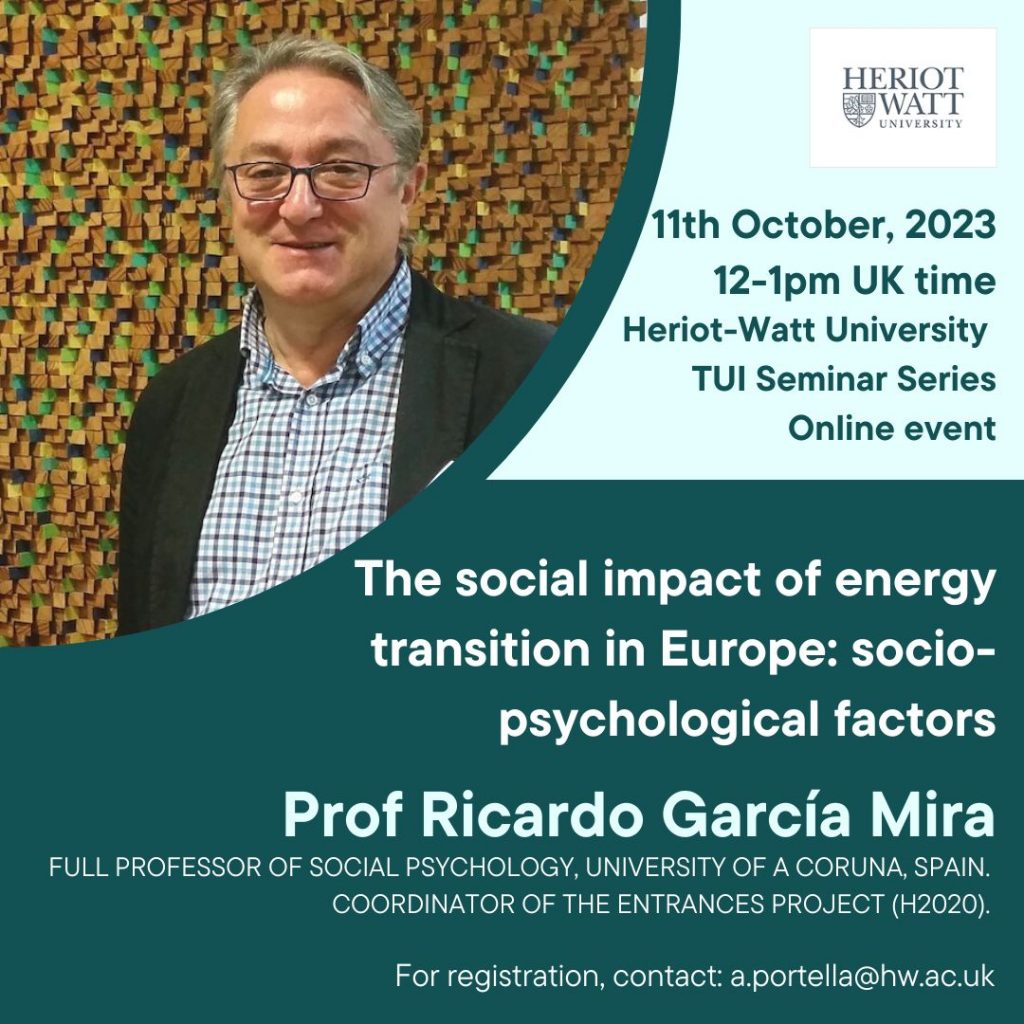
TUI Seminar The social impact of energy transition in Europe: socio-psychological factors
TUI Seminar Professor Ricardo Garcia
Hate: “As Regular as Rain”A pilot study into the psychological effects of hate crime on Gypsy, Traveller, Roma, Showmen and Boater (GTRSB) communities
“No Time to Deal with One Crisis at a Time: Delivering Places for People, Planet and Equity”
Ageing high streets: Adding life to years
Dr. Luca Bruneli
Judge the hour and size up the situation: Ph.D. journey during the COVID-19 pandemic
Dr. Yiyi Chen
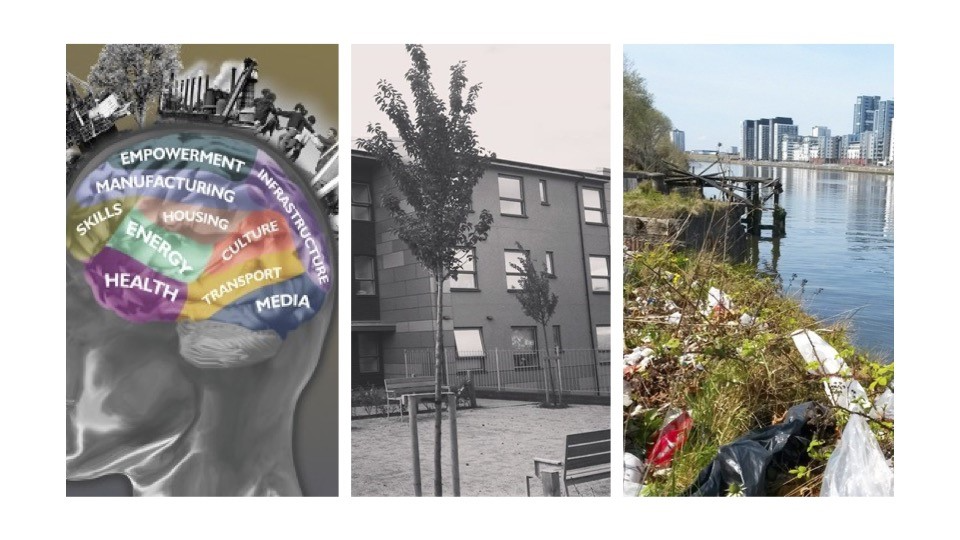
20 Minute Neighbourhoods: New Policy, Old Idea
Guest Speaker: Euan Leitch, Chief Executive SURF – Scotland’s Regeneration Forum
The Scottish Government is placing the 20 minute neighbourhood concept at the heart of a number of policy agendas, from health to climate crisis. It’s a concept championed in Paris, Portland and Melbourne but Scotland appears to be the first place to attempt to deliver it nationally. SURF is hosting a network for practitioners on the area, exploring what this really means in practice and asking how easy is it going to be to roll this deceptively simple idea out across Scotland? Euan will discuss the emerging definition of the concept and the challenges to delivery that the network is raising.
SURF is Scotland’s regeneration forum for practitioners, policy makers and academics. By sharing and channelling the experience, views and ideas and of its extensive membership of over 300 cross-sector organisations, SURF helps to inform better policy and practice for more successful and sustainable community regeneration throughout Scotland. SURF is primarily concerned with shared efforts to tackle the causes and degenerative impacts of poverty and inequalities.
About Euan Leitch
Euan joined SURF in May 2021 following 8 years with the Built Environment Forum Scotland. He is a longstanding supporter of SURF and its cross-sector collaborative approach to addressing inequalities. He studied Architectural History at the University of Edinburgh followed by Urban & Regional Planning at Heriot Watt. At BEFS Euan delivered a strong programme of strategic policy work that included promoting and fostering the productive links between the built environment and community regeneration, diversity, resilience and the maintenance agenda. A priority for Euan will be ensuring that communities experiencing the consequences of deprivation are actively involved in responding to the climate emergency. Euan is a Board Member of Under One Roof.
We look forward to seeing you for what is sure to be an informative and engaging seminar.
Please send an email to: Professor Ryan Woolrych, R.D.Woolrych@hw.ac.uk or Lisa Lavia, ll77@hw.ac.uk in order to join this seminar.
Healthy home design: favourite places at the building edge and their restorative qualities
Presenter: Mina Sufineyestani
Mina will present her findings after which there will be a short 20 minute Q&A session.
This is a fantastic opportunity for all of us to interact with one another, share our experiences and knowledge and take a virtual coffee and lunch break together. We hope to see many of you there; staff, PhDs, master students, as well as external listeners, are all welcome!
If you require any further information, please contact C.A.Jones@hw.ac.uk or ms316@hw.ac.uk.
Experiences of older people and social inclusion in relation to smart cities: A case study of Chongqing, China
Presenter: Manlin Li
We are delighted to invite you to this, our first session of TUI PGR Research Seminars 2021, in which Manlin Li will share her research. There will be a short Q&A session afterwards.
This is a fantastic opportunity for all of us to interact with one another, share our experiences and knowledge and take a virtual coffee and lunch break together. We hope to see many of you there; staff, PhDs, master students, as well as external listeners, are all welcome!
If you require any further information, please contact C.A.Jones@hw.ac.uk or ms316@hw.ac.uk.
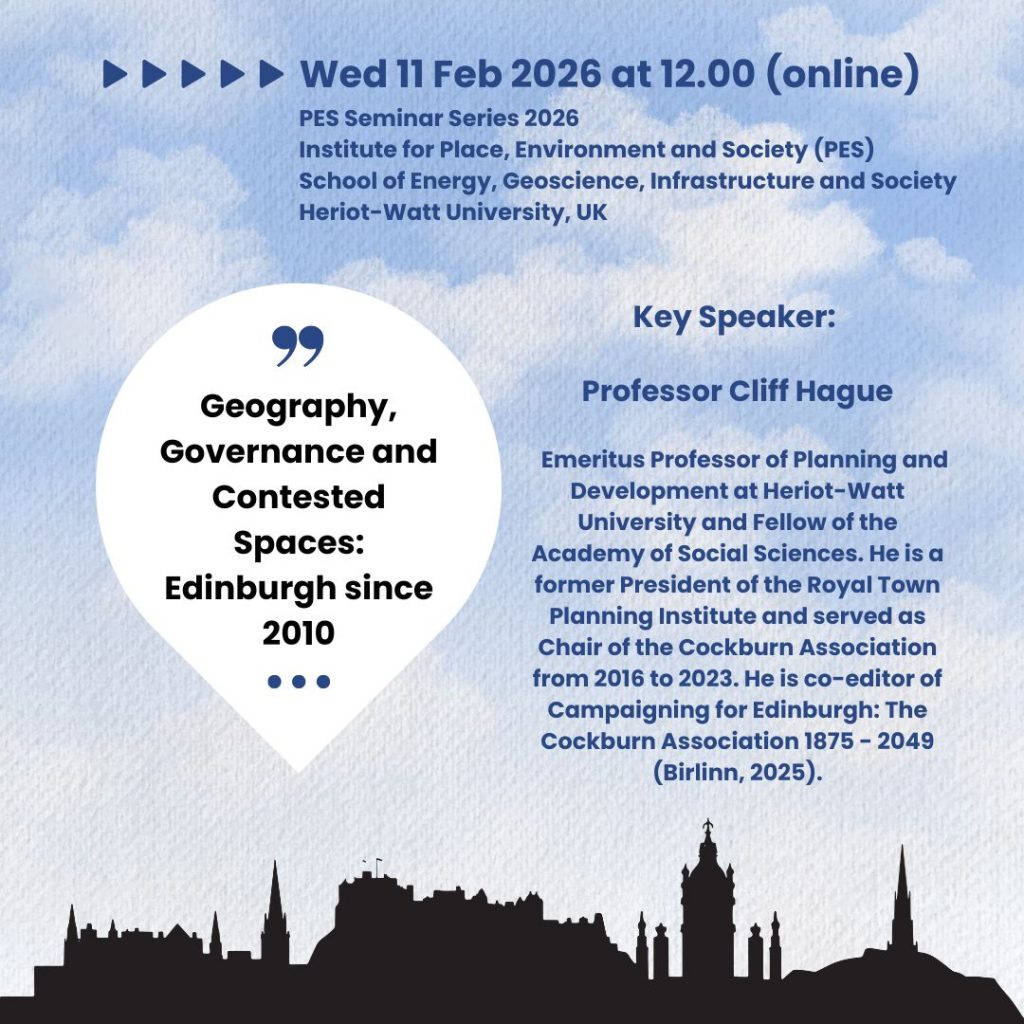
The Institute for Place, Environment and Society (PES) Seminar Series
Talk: Geography, Governance and Contested Spaces: Edinburgh since 2010.
Speaker: Professor Cliff Hague.
Date: 11 February 2026.
Time: 12:00 (UK time).
Format: Online.
Professor Cliff Hague is Emeritus Professor of Planning and Development at Heriot-Watt University and a Fellow of the Academy of Social Sciences. He is a former President of the Royal Town Planning Institute and served as Chair of the Cockburn Association between 2016 and 2023. He is also co-editor of Campaigning for Edinburgh: The Cockburn Association 1875–2049 (Birlinn, 2025).
Geography, Governance and Contested Spaces explores the intersections between geography, governance and contested urban spaces in Edinburgh over the past decade, drawing on Professor Hague’s extensive academic and professional experience.
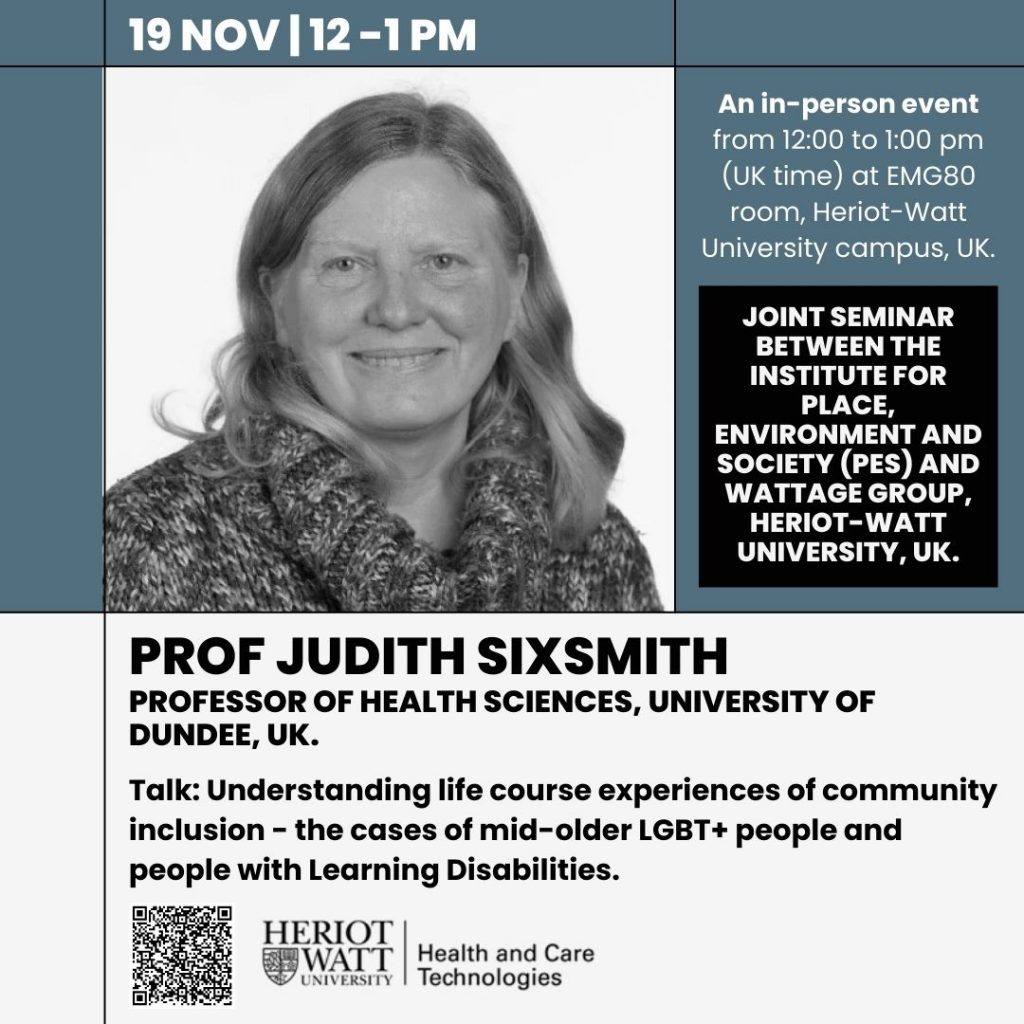
Talk: Understanding life course experiences of community inclusion – the cases of mid-older LGBT+ people and people with Learning Disabilities.
Speaker: Professor Judith Sixsmith.
Date: 19 November 2025.
Time: 12:00 (UK time).
Format: Face-to-Face Only. Joint event with the WATTAGE Group.
Professor Judith Sixsmith will explore how diverse groups experience inclusion and exclusion across the life course. This in-person session will open a meaningful discussion on the social, environmental, and health dimensions of community inclusion—particularly focusing on mid-older LGBT+ people and people with learning disabilities. The event will also reflect on practical and policy implications for fostering inclusive, supportive, and equitable communities.
Understanding life course experiences of community inclusion explores how diverse groups experience inclusion and exclusion across the life course. This in-person session will open a meaningful discussion on the social, environmental, and health dimensions of community inclusion—particularly focusing on mid-older LGBT+ people and people with learning disabilities. The event will also reflect on practical and policy implications for fostering inclusive, supportive, and equitable communities.
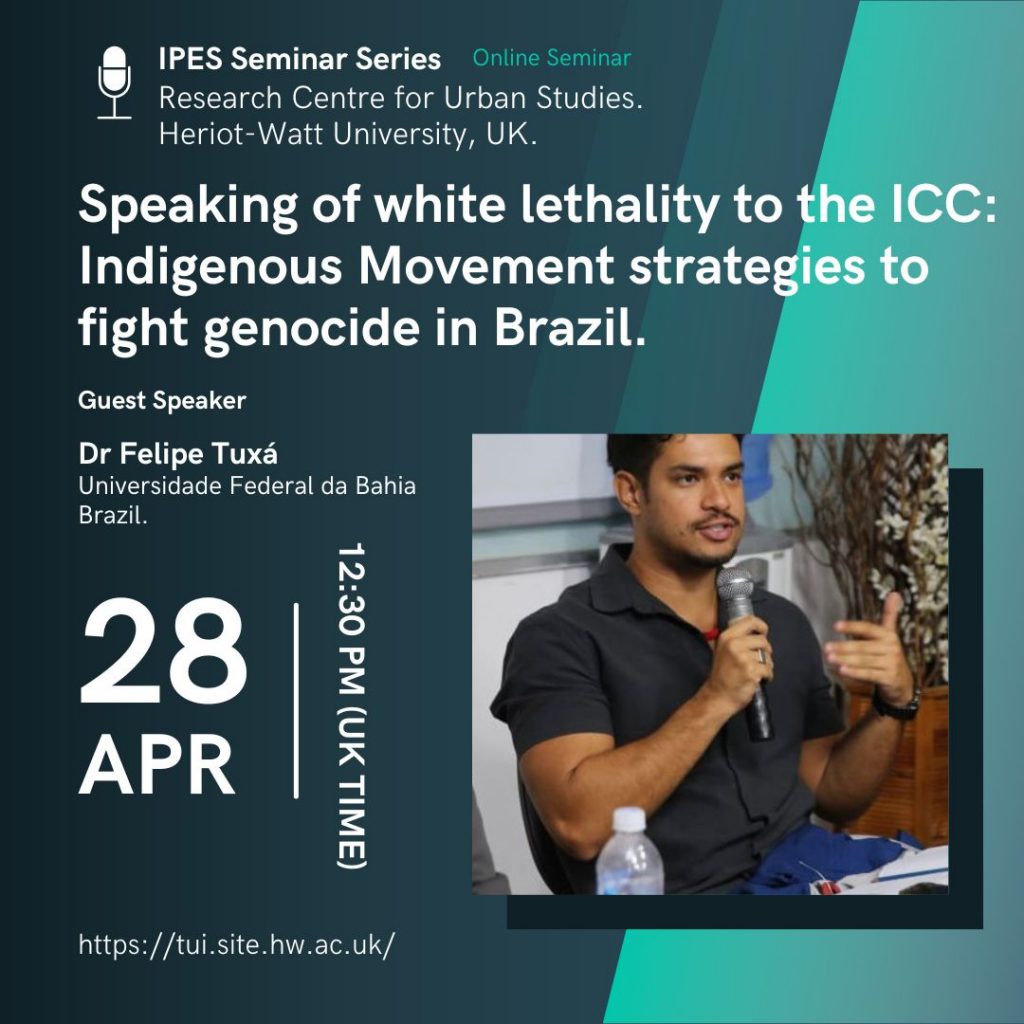
Talk: Speaking of White Lethality to the ICC: Indigenous Movement Strategies to Fight Genocide in Brazil.
Speaker: Dr Felipe Tuxa.
Date: 28 April 2025.
Time: 12:00 (UK time).
Format: Online.
Felipe Tuxá is an indigenous anthropologist of the Tuxá people from Rodelas, Bahia, Brazil. He currently teaches at the Universidade Federal da Bahia (Brazil), Salvador in its Ethnology and Anthropology Department. His research and teaching interests include violence against indigenous peoples in Brazil, violation of indigenous rights, politics of indigenous genocide, indigenous epistemologies and affirmative actions, indigenous methodologies and research ethics. His PhD thesis “White lethality: negationism, anti-indigenous violence and politics of genocide” received an award by the Federal Agency for Support and Evaluation of Graduate Education (CAPES) in 2023.
What happens when an indigenous organization files a genocide lawsuit against a president in the largest international criminal court? is the guiding question of this work. On August 9, 2021, the Coalition of Indigenous Peoples of Brazil (APIB) denounced in The Hague, in an unprecedented way, the then president Jair Bolsonaro, for genocide against indigenous peoples. With a robust technical piece prepared by indigenous lawyers, this strategic litigation action, led by the Legal Department of the largest indigenous organization in the country, is a major step in indigenous history in Brazil, showing its growing maturity and political range on the national and international scale. I was part of this process, both as an indigenous researcher and ethnographer, as, at the request of the organization itself, I conducted an ethnography of the meetings and prior preparation, writing an analysis and producing an indigenous memory of this chapter of APIB’s history. In this presentation I will highlight the legal disputes around the genocide paradigm, how APIB’s lawyers and leaders built intelligibility around indigenous notions of life and death, territory, destruction and ecocide. At the same time, its political meanings will be addressed from the point of view of the history of social movements, with an emphasis on the indigenous movement, on growing autonomy and different ways of producing national and international political influences in the legal sphere as a way of fighting and protecting rights.
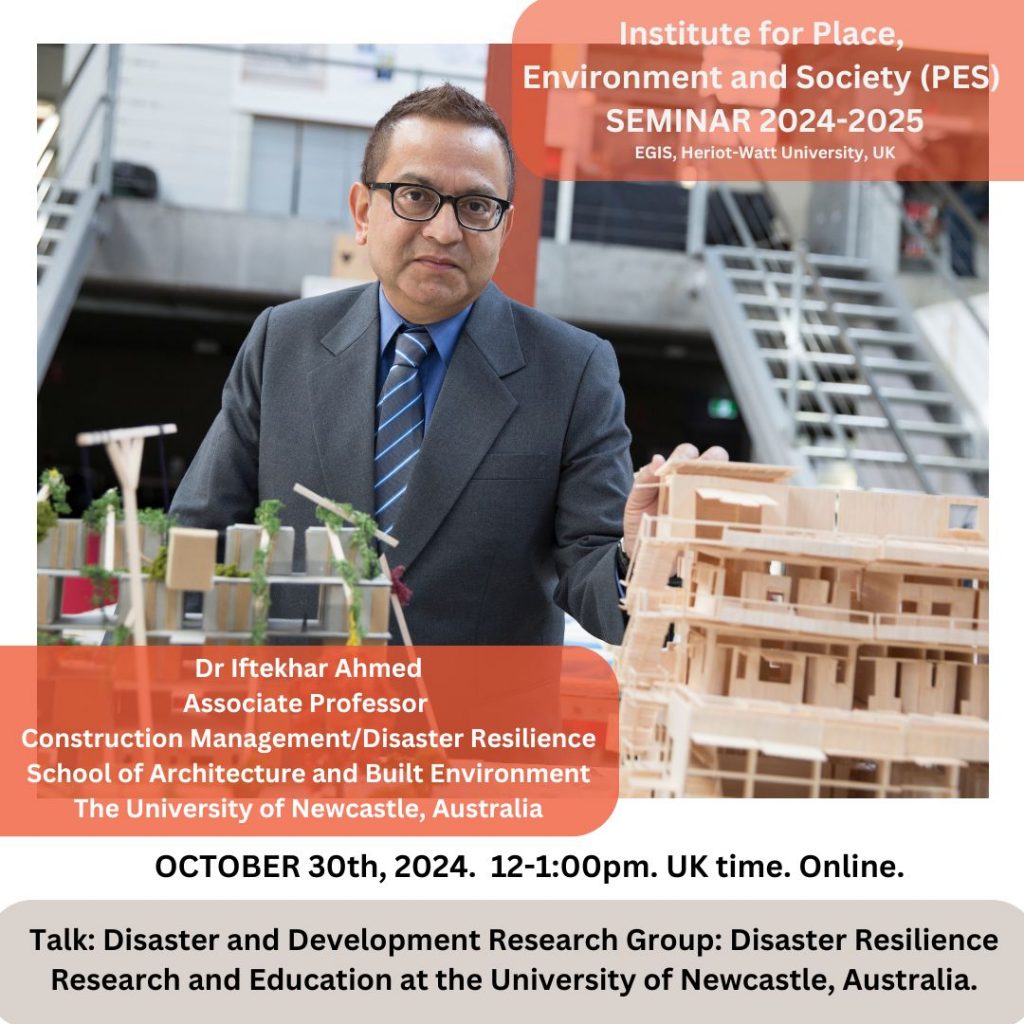
Talk: Disaster and Development Research Group: Disaster Resilience Research and Education at the University of Newcastle, Australia.
Speaker: Dr Iftekhar Ahmed.
Date: 30 October 2024.
Time: 12:00 (UK time).
Format: Online.
Dr Iftekhar Ahmed is an Associate Professor and Program Convenor of the postgraduate programs in Disaster Risk and Resilience at the University of Newcastle, Australia. He teaches principles of disaster risk and resilience, resilience of the built environment, and research in the built environment. His research interests include post-disaster housing, disaster risk reduction, climate change adaptation, and urbanization in the Asia-Pacific. Dr Ahmed has authored several books and numerous peer-reviewed publications and participates in various research and evaluation projects related to disaster resilience. He is the lead author of “Disaster Resilience in South Asia: Tackling the Odds in the Sub-Continental Fringes” (Routledge, UK, 2020). Dr Ahmed holds a PhD from Oxford Brookes University, UK; a Master of Science in Architecture Studies from the Massachusetts Institute of Technology (MIT), USA; and a Bachelor of Architecture (Hons.) from the Indian Institute of Technology (IIT) Kharagpur, India.
Disaster and Development Research Group: Disaster Resilience Research and Education at the University of Newcastle, Australia: This presentation will highlight the education and research on disaster resilience at the University of Newcastle’s School of Architecture and Built Environment in Australia. The Graduate Certificate and Master of Disaster Risk and Resilience programs are co-certified by the United Nations through UNITAR and CIFAL-Newcastle, aligning with global frameworks such as the Sustainable Development Goals (SDGs) and the Sendai Framework for Disaster Risk Reduction. The Disaster and Development Research Group conducts various research projects in Australia and the Asia-Pacific region, collaborating with multiple partners. These engagements lead to numerous publications and the development of extensive networks. Additionally, the University offers a PhD program in disaster management, attracting scholars worldwide.
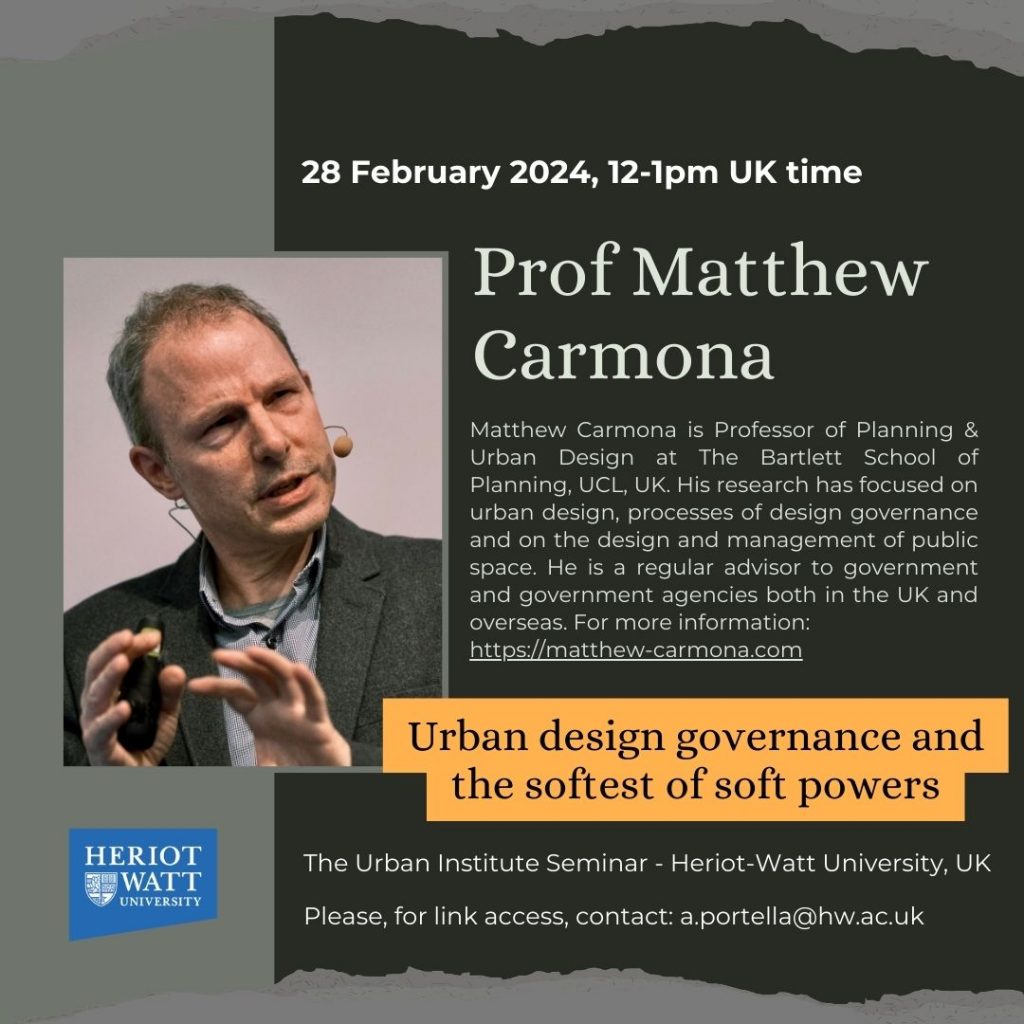
Talk: Urban Design Governance and The Softest of Soft Powers
Speaker: Professor Matthew Carmona.
Date: 28 February 2024.
Time: 12:00 (UK time).
Format: Online.
Matthew Carmona is Professor of Planning & Urban Design at The Bartlett School of Planning, University College London, UK. His research has focused on urban design, processes of design governance and on the design and management of public space. Matthew was educated at the University of Nottingham, UK, and is a chartered architect and planner. He Chairs the Place Alliance which brings together organisations and individuals who share a belief that the quality of the built environment has a profound influence on people’s lives. In 2016 he was Specialist Advisor to the House of Lords Select Committee on National Policy for the Built Environment. In 2015 and 2022 he won the RTPI’s Academic Award for Research Excellence and in 2016 the RTPI Award for Wider Engagement. In 2018 he won the Association of European Schools of Planning (AESOP) Prize Best Published Paper award. In 2018 he launched www.place-value-wiki.net, a new online resource that brings together international evidence on how place quality impacts on our health, social, economic and environmental well-being. Matthew is European Associate Editor for the ‘Journal of Urban Design’. He is a regular advisor to government and government agencies both in the UK and overseas and lectures internationally. He writes a column for Town & Country Planning, the journal of the Town & Country Planning. For more information: https://matthew-carmona.com
Urban Design Governance and The Softest of Soft Powers: This talk explores the soft powers of urban design governance as operationalised through a range of informal tools used by the public sector. It discusses findings in a new open-source book (Urban design governance, Soft powers and the European experience) which reveals how such means can offer an effective vehicle to build a culture of place quality and to more consistently deliver high quality design though place-shaping processes. By way of illustration, the softest of soft initiatives is discussed, the work of the Place Alliance, a university-led research and campaigning platform in the UK.
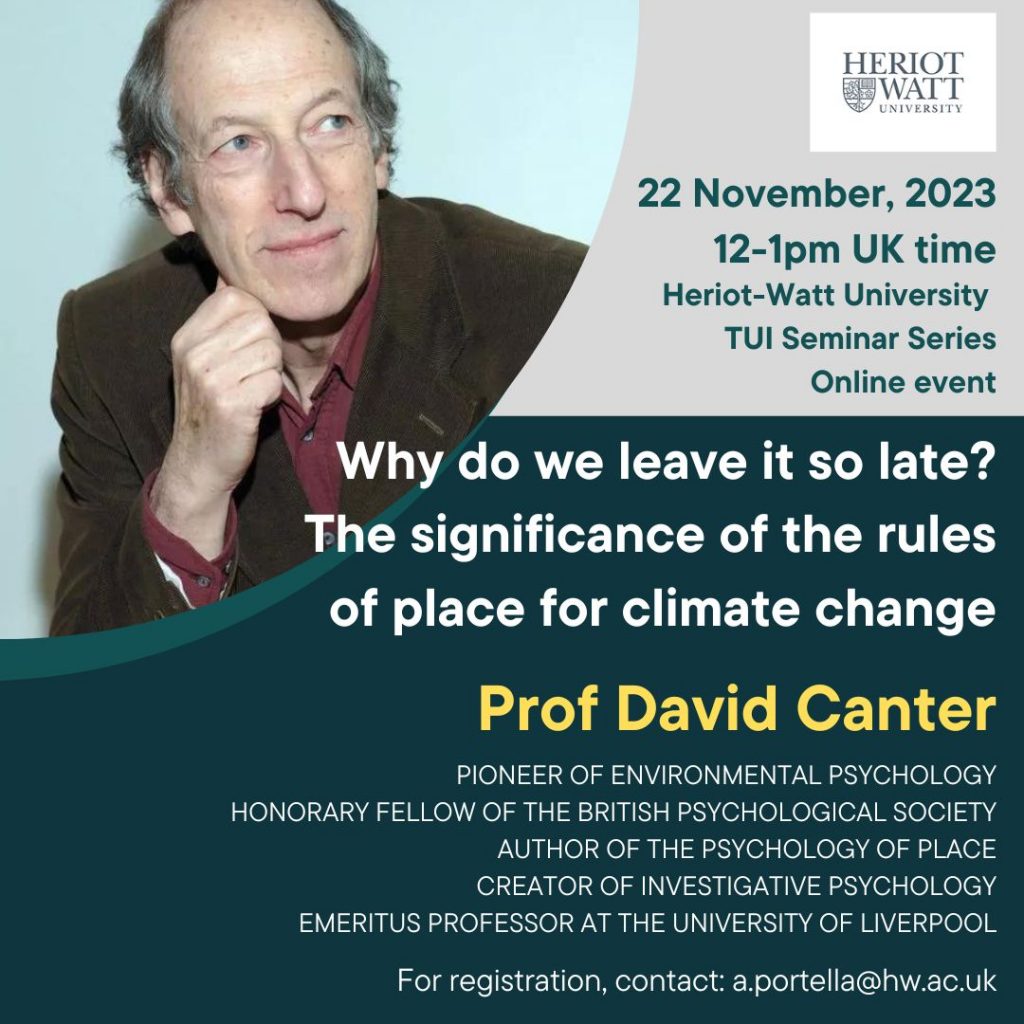
Talk: Why do we leave it so late? The significance of the rules of place for climate change.
Speaker: Professor David Canter.
Date: 22 November 2023.
Time: 12:00 (UK time).
Format: Online.
Professor Canter played a crucial role in establishing Environmental Psychology as a discipline. Honorary Fellow of the British Psychological Society, Author of The Psychology of Place, Emeritus Professor at The University of Liverpool. Professor Canter is frequently asked to contribute to strategic policing issues at national and international levels. He has provided expert evidence in diverse legal cases of international significance https://www.davidcanter.com/.
Why do we leave it so late? The significance of the rules of place for climate change: The challenge of climate change and environmental embedded degradation is an example of how an emergency is becoming a disaster. Consideration of many other examples of this process draw attention to how our relations to places engender inertia. These relations are embedded in place rules which grow out of environmental roles. At the heart of these are the well-established distinctions between dwelling with and making use of the environment. It is only by moving from the roles associated with using to those that grow out of dwelling that a disaster can be avoided.
Talk: The social impact of energy transition in Europe: socio-psychological factors.
Speaker: Professor Ricardo Garcia Mira.
Date: 11 October 2023.
Time: 12:00 (UK time).
Format: Online.
Ricardo García Mira is a Full Professor of Social Psychology – University of A Coruna, Galicia, Spain. Coordinator of the ENTRANCES project (H2020). Partner in TRIGGER project (Horizon-Europe). He was a member of the Parliament of Spain in the XI and XII legislatures (Climate Change Spokesperson). Doctor Honoris Causa by the ‘Alexander Ioan Cuza’ University, Iasi (2018). Visiting Professor at the University of Tokyo, Japan (2021). Visiting Scholar at the College of Human Ecology, Cornell University, Ithaca, New York (2020). Visiting Professor of the Institute for Policy Research – University of Bath, UK (2016-2024). President of the International Association for People-environment Studies (IAPS) (2014-2018). Fellow of the International Association of Applied Psychology (IAAP) (2018-).
The social impact of energy transition in Europe: socio-psychological factors: The de-territorialisation process in Coal and Carbon-intensive regions has raised critical constraints for management, because the progressive weakening of the tie between a community and its territory. As one of most important processes of the last decade, the energy transition is affecting all aspects of human life (social, political, economic, cultural, ecological, and psychological). The main objective of this talk is to introduce our research analysing the social aspects of the transition to clean energy, focusing in developing a theoretically-based and empirically-grounded understanding of cross-cutting issues related to social and human aspects.